
April 2026 has already seen significant developments in the family justice system, including a change in leadership and major reforms.
The President has retired
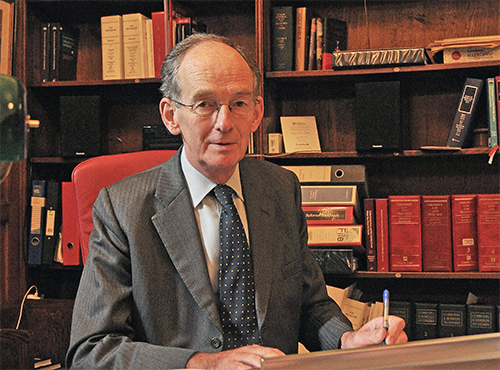
Sir Andrew McFarlane retired on 14 April 2026 as President of the Family Division, Head of Family Justice, and President of the Court of Protection, after eight years in post. He succeeded Sir James Munby in 2018.
Called to the Bar in 1977 and taking Silk in 1998, Sir Andrew’s judicial career has been extensive: Recorder (1995), Deputy High Court Judge (2000), and High Court Judge in the Family Division (2005). His tenure has been marked by steady leadership of change in family justice.
The process of appointing his successor is now underway, and the announcement is eagerly awaited.
A Vision for Reform
Sir Andrew’s tenure has seen modernisation and reform across the family justice system.
Just before his retirement, Sir Andrew announced his final view on 01 April 2026, setting a positive tone for the next chapter of the Family Court, focusing on:
- Children
- Modernisation
- A justice system that better serves families with compassion and efficiency
These themes are reflected in one of the most significant reforms now underway: the national rollout of Child-Focused Courts.
Child Focused Courts

Sir Andrew welcomed the national expansion of Child-Focused Courts across England and Wales. This is supported by the Government as part of the Government’s Plan for Change to protect children and deliver fairer and faster justice
This ground breaking model represents a fundamental shift in how the Court will deal with private law proceedings. This is achieved by gaining an understanding of the impact the dispute is having on the child and focusing the parties on how to address that. This will improve the whole family court experience for all involved, resulting in fewer hearings and improved outcomes.
This model was piloted and known as the “Private Law Pathfinder,” it demonstrated measurable success by resolving cases more quickly (by seven and a half months) and minimising the impact of trauma on children.
From Conflict to Child Focus
Private law proceedings can often be characterised with parties being locked into entrenched conflict, causing lengthy delays, and frequently forgetting the impact of the adversarial dynamics on children’s welfare
Child-Focused Courts aim to address this by:
- Identifying any risks to the children’s welfare at an early stage, including the risk of experiencing domestic abuse
- Improving coordination between agencies, such as local authorities and the police, for the identification of safeguarding concerns
- Streamlining court processes to reduce delay
The shift in this new process envisages the reduction in the likelihood of returning cases, protecting children and families from further trauma.
The Child Impact Report: A Key Innovation
The child focused model requires CAFCASS (Children and Families Court Advisory Support Services) to meet with the family before the first hearing to prepare a Child Impact Report, which includes:
- The child’s voice
- Analysis of the child’s lived experience
- Identification of any safeguarding concerns
- The impact of parental conflict
This “front-loading” of information ensures that both the court and the parties are focused on the child’s welfare from the outset.
Importantly, the court retains the power to direct a more detailed Section 7 report where this is necessary.
Benefits of the Model
- Earlier and more meaningful involvement of children
- focused assessments
- Swifter process
- Reducing delay
All resulting in a robust, safe, and more informed decision making.
Judicial Perspective
The judiciary has welcomed the rollout of Child Focused Courts.
“The positive thing about a Child Focused Court is that it does what it says on the tin – it puts the child’s safety and welfare at the heart of everything the court does. The emphasis on talking to children whenever we can is long overdue, That, together with the front loading of information about a child’s circumstances in the Child Impact Report, helps parents and the court focus on what the child’s safety and welfare demand early in the legal proceedings. I am clear that this promotes earlier resolution and better, longer lasting decisions which can only be good for children and their families”.
Mrs Justice Gwynneth Knowles, the judicial lead for Child Focused Courts.
Looking Ahead
Currently, operating in 10 of the 43 Family Court areas, Child-Focused Courts are now set for national rollout with government backing.
This reform reinforces a fundamental principle: applications for child arrangements should be a last resort, that is, only progressed when parents are unable to agree on the arrangements for the children.
The Family Court is being reshaped to reflect its true purpose, not to be treated simply as a legal battlefield between the adults, but as a mechanism to safeguard and promote the welfare of children. The judges will have a focused assessment, placing the child at the centre and being informed of the impact of the proceedings on the child.
Why these changes matter for Social Workers and CAFCASS officers
This shift is significant as it aligns closely with good practice values:
- listening to children,
- hearing their voice,
- understanding their lived experience, and
- early intervention to reduce risks of harm.
Final Thoughts
The rollout of Child-Focused Courts marks a meaningful step forward in family justice. By placing children firmly at the centre of proceedings and reducing adversarial conflict, the system is moving toward outcomes that are not only quicker, but more importantly, child focused.
How We Can Help
We specialise in delivering expert legal and social care training.
Whether you require bespoke, practical training on private law proceedings, effective court report writing, or wider legal and social care matters, we would be pleased to support you.
Please contact us for a no-obligation discussion about your training needs.
Copyright
The content of this legal briefing is the copyright of Kingsley Knight Training.
It may be printed or downloaded in an unaltered form for personal use or reference only. No part of this publication may be sold, licensed, transferred, copied, or reproduced, in whole or in part, in any form or by any means, without prior written permission from Kingsley Knight Training.
Disclaimer:
The contents of this briefing are provided for information and are not intended to be relied upon as legal advice.