

The Rt Hon Sir James Munby, the former president of the Family Division and of the Court of Protection, passed away on 01 January 2026, aged 77 years.
His death marks the loss of an influential reformer in modern family justice.
Sir James Munby
Photos by Cambridge Law Faculty, licensed under CC BY 3.0
Sir James was an influential judge who established legal precedents that continue to shape legal practice today. His focus on transparency, proportionality, and proper evidence has had a lasting impact on how justice is delivered.
Scroll down to read some of the leading judgments in children and adult law that have shaped the application of the law.
His successor, Sir Andrew McFarlane, described Sir James
“as exactly the right man, in the right job, and at the right time. He showed this …with the introduction of the Public Law Outline and the bedding down on the Family Court.”
A Personal Milestone
The changes Sir James brought were radical and had not only a professional but also a personal impact on me. His reforms inspired me to write and publish my first legal practitioners’ guide:
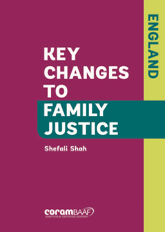
The purpose of this guide was to support practitioners and professionals in understanding the new legal landscape and to feel confident in applying it in day-to-day practice.
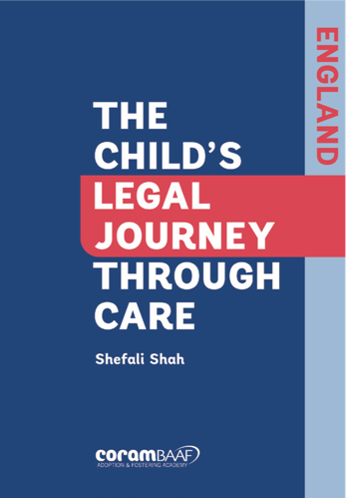
This was the beginning of my own journey in legal publishing and was followed by the second and more recent legal guide:
The Child’s Legal Journey Through Care
This guide was written not only to support practitioners but also to help children understand their own journey independently or with the support of their carers or professionals around them.
A Legal Legacy
Sir James began his energetic and illustrious career as a barrister in 1971. He took silk in 1988 and was appointed as a High Court judge in 2000. Later elevated to a Lord Justice of Appeal in 2009 and then President of the Family Division from 2013 to 2019.
In retirement, Sir James continued to contribute to family justice as the Chair of the Nuffield Family Justice Observatory and by writing for Family Affairs and other journals.
An Unforgettable Judge
Sir James was widely recognised as a fair and compassionate judge. I had the privilege of attending a conference on research in the family court. After Sir James completed his presentation I raised that social workers are often hesitant to refer to research in their evidence due to fear of facing aggressive cross examination when in the witness box.
I will never forget Sir James’s response:
“I will never allow bullying of witnesses in my courts.”
As a lawyer, I found this to be a commendable, judicious approach. At the same I also reflected that, from a social worker’s perspective, when being cross examined on their understanding and application of the research, they may struggle to appreciate the delicate balance between what they perceive as bullying and what, in fact, constitutes as effective cross examination.
Shaping the Law with Key Judgements
Lorraine Cavanagh KC, co-chair of the Association of Lawyers for Children, speaking to the Law Society Gazette described Sir James’s judgments as ‘the weave of the fabric of modern day family law’.
1. The “Transparency Revolution”
Sir James was a driving force in helping to make the Family Court and the Court of Protection more transparent and rid them of the notion of being secret courts.
Re J (A Child) [2013] EWCA Civ 89
This case raised important questions about the extent to which the public should be able to read and see what disgruntled parents say about deficiencies in the family justice system.
The case also raised important questions about how the court should adapt its practice to the realities of the internet and social media.
Facts of the case:
A father posted videos on the internet detailing the removal of his children from the family home, in which he accused social workers of being “vampire-ish” and “wicked”. The local authority sought to stop this, but the court ruled that simply being distressed by criticism is not enough to warrant restricting it.
This case resulted in:
- addressing the conflict between protecting children’s privacy and the public interest in scrutinising the work of local authorities and the courts.
- Being a key step in shifting the culture of the family courts towards greater openness and accountability. Sir James took the view that the remedy for public distrust in the family court is not more secrecy but more transparency.
- Established the practice that the family courts should be more open to the media.
- Introduction of guidance by Sir James on publishing judgments from the court of protection and the family court.
2. Care Proceedings and Evidence
Sir James was particularly interested in reunification of children with their family.
Re B (A Child) [2013] UKSC 33 and Re B-S (Children) [2013] EWCA Civ 1146
These two landmark cases changed the legal landscape in relation to permanency planning for children
To read more about the impact of these two cases in our previous blog
Re B
In Re B, the Supreme Court established the legal hurdle that an adoption order would only be made as a “last resort” ….” when all else fails.”
“..before making an adoption order in such a case, the court must be satisfied that there is no practical way of the authorities (or others) providing the requisite assistance and support’. Lord Neuberger, para 105
Re B-S
Following on from Re B in Re B-S, Sir James, sitting in the Court of Appeal, focused on the quality and analysis of the evidence. It clarified how the court required social work evidence to be presented in the form of a balance sheet setting out the realistic options with robust analysis to support the local authority’s recommendations and care plan for the child
Sir James stated that it was time to draw the threads of the Adoption and Children Act 2022 in line with the European Convention of Human Rights, to spell out good practice as
“This sloppy practice must stop. It is simply unacceptable in a forensic context where the issues are so grave and the stakes, for both child and parent, so high. (para 40)
3. Court of Protection & Mental Capacity- Adult Case
Re AG [2015] EWCOP 78
Facts of the case:
AG, a 30 year old woman, has moderate learning disability and autism spectrum disorder, and in 2007 was diagnosed with suffering from depression.
AG lived partly at her own home and partly at her mother’s home. Following a number of safeguarding allegations, regarding the mother in relation to AG, the local authority moved AG to a care home without seeking prior authorisation from the Court of Protection.
The local authority, after placement applied to the Court of Protection for a decision regarding AG’s residence on the basis that she lacked mental capacity to do so. The order was granted that AG lacked capacity and that it was in her best interests to reside at the care home and to have contact with her mother.
The mother appealed on four grounds, including that there had not been a finding of fact relating to the safeguarding allegations, which amounted to a procedural violation of Article 8 of the European Convention of Human Rights.
The appeal was dismissed, and Sir James clarified that unlike care proceedings relating to children, there is no requirement to establish any ‘threshold’ of wrongdoing in proceedings relating to an adult as established in the earlier case of Re S (Adult’s Lack of Capacity: Care and Residence) [2003] EWHC 1909 (Fam))
Final observation by Sir James
At the end of this judgment, Sir James provided guidance on how local authorities should deal with similar cases:
- Local authorities should obtain the appropriate judicial authority before moving an adult lacking capacity from their home into alternative accommodation. “local authorities do not themselves have the power to do this.” para 56
- Local authorities need to take steps to minmise the understandable distress and anger that is likely to be caused to someone, as in this case AG’s mother when initial relief is obtained from the court on the basis of allegations which are not thereafter pursued.
Final Tribute

Sir James will be greatly missed but never forgotten. He leaves behind a remarkable legal legacy. Sir James’s influence will continue to be felt through his judgments and the practice that guides us in family justice.
Without ever knowing it, Sir James also left a personal imprint on my own professional journey, for which I am deeply grateful.
How we can help
We are specialists in providing legal and social care training. If you require bespoke and practical skilled training on private law proceedings or writing effective court reports, or any other legal or social care matters, please contact us for a no-obligation discussion of your training needs.
Copyright:
The content of this legal briefing is the copyright of Kingsley Knight Training. It can be printed and downloaded free of charge in an unaltered form temporarily for personal use or reference purposes. However, it is prohibited for any content printed or downloaded to be sold, licensed, transferred, copied, or reproduced in whole or in part in any manner or in or on any media to any person without the prior consent of Kingsley Knight.
Disclaimer:
The contents of this guide are for information and are not intended to be relied upon as legal advice.